If you’ve been following the AI space in 2026, you’ve probably noticed the explosion of agent frameworks. CrewAI, LangChain, AutoGPT, OpenAI Agents SDK — every week there’s a new one. But here’s the problem nobody talks about: picking the wrong framework can waste weeks of your time.
I’ve built production agents with all four of these frameworks. Some made me want to throw my laptop out the window. Others were surprisingly delightful. Here’s my honest comparison — no fluff, no sponsorship, just what actually works.
Why This Comparison Matters
Before I dive in, let me tell you what happened when I picked the wrong framework. I spent two weeks building a multi-agent workflow in LangChain. It worked, barely. Then I rebuilt the same thing in CrewAI in two days. The code was cleaner, it ran faster, and I actually understood what was happening.
That experience taught me something: the framework you choose determines 80% of your developer experience. Pick wisely.
The Contenders
Here’s a quick overview of what we’re comparing. Each framework takes a fundamentally different approach to building AI agents.
| Framework | Best For | Learning Curve | Code Required | Price |
|---|---|---|---|---|
| CrewAI | Multi-agent collaboration, role-based agents | Low | Minimal | Free (open source) |
| LangChain | Complex chains, RAG, enterprise apps | High | Significant | Free (open source) |
| AutoGPT | Autonomous long-running tasks | Medium | Minimal | Free (open source) |
| OpenAI Agents SDK | Simple single-agent tasks, OpenAI ecosystem | Low | Minimal | Pay per token |
CrewAI — The People’s Champion
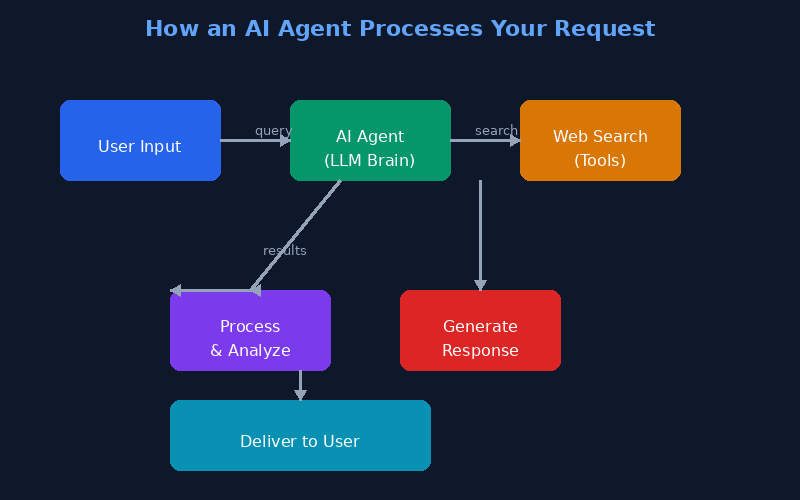
CrewAI is my personal favorite, and not because it’s the most powerful — it’s because it makes agent development fun. You define agents as roles with personalities, give them tasks, and let them collaborate. It feels like directing a team instead of writing code.
Real code example:
from crewai import Agent, Task, Crew

# Define agents with roles
researcher = Agent(
    role='Research Analyst',
    goal='Find the latest developments in AI agents',
    backstory='You are a tech journalist who has covered AI for 5 years.',
)

writer = Agent(
    role='Content Writer',
    goal='Write clear, engaging articles from research',
    backstory='You transform complex topics into readable content.',
)

# Define the task
research_task = Task(
    description='Research the top 5 AI agent trends in 2026',
    expected_output='A bullet-point summary with key statistics',
    agent=researcher
)

# Create and run the crew
crew = Crew(
    agents=[researcher, writer],
    tasks=[research_task, write_task],
    verbose=True
)
result = crew.kickoff()
LangChain — The Heavy Lifter
LangChain is the most powerful framework on this list, but it comes with a price: complexity. If you need RAG (Retrieval-Augmented Generation), complex prompt chains, or enterprise-grade features, LangChain is the answer. But be prepared for a steep learning curve.
The good:
- Most extensive ecosystem of integrations
- Powerful RAG capabilities out of the box
- Excellent for production deployments
- LangSmith for debugging and monitoring
The not-so-good:
- Documentation can be overwhelming and sometimes outdated
- Breaking changes between versions are common
- Simple tasks require more code than competitors
- Learning curve can take weeks, not days
AutoGPT — The Autonomous Worker
AutoGPT lets you give an agent a goal and let it run autonomously. It’ll break down the goal into sub-tasks, execute them, and iterate until complete. It’s impressive to watch, but it can be unpredictable.
Real code example:
# AutoGPT configuration
agent = AutoGPT(
    api_key=os.getenv("OPENAI_API_KEY"),
    llm=GPT4o(),
    tools=[web_search, file_save, code_execute],
    continuous_mode=False,  # Ask before each step
    max_steps=10
)

# Set a goal and run
agent.run("Research the top 10 AI startups in India and save findings to a file")
The good:
- True autonomous operation — set it and forget it
- Great for research and data collection tasks
- Minimal setup required
The not-so-good:
- Can go off-track and waste tokens
- Hard to debug when things go wrong
- Limited customization for specific workflows
- Token costs can add up quickly
OpenAI Agents SDK — The New Kid
OpenAI released their Agents SDK in late 2025, and it’s quickly becoming popular for simple agent use cases. If you’re already in the OpenAI ecosystem, this is the most natural fit.
The good:
- Incredibly simple API — 5 lines for a basic agent
- Native integration with OpenAI models and tools
- Built-in guardrails for safety
- Excellent documentation
The not-so-good:
- Locked into OpenAI ecosystem
- Limited multi-agent support
- Pay per token can get expensive at scale
- Newer framework, smaller community
The Verdict: Which One Should You Pick?
Here’s my straightforward recommendation based on what you’re building:
| Your Situation | Best Framework | Why |
|---|---|---|
| Building your first AI agent | CrewAI | Easiest to learn, great community, works immediately |
| Enterprise app with search/RAG | LangChain | Most powerful ecosystem, best for complex flows |
| Long-running research tasks | AutoGPT | True autonomy, minimal supervision needed |
| Quick prototype in OpenAI | OpenAI SDK | Fastest to deploy, zero configuration |
| Team of multiple collaborating agents | CrewAI | Role-based design makes multi-agent natural |
| Production pipeline with monitoring | LangChain | LangSmith + ecosystem wins for serious apps |
My personal pick for most people: CrewAI. It balances power and simplicity better than anything else in 2026. Start there. If you outgrow it, you’ll know exactly what you need from LangChain or the OpenAI SDK.
Final Thoughts
Here’s the truth: there is no perfect framework. There’s only the right framework for your specific use case. Start with the simplest tool that could possibly work. CrewAI is that tool for most people. Upgrade only when you genuinely hit a limitation.
And whatever you pick, build something real with it this week. Not a tutorial example. An actual tool you’ll use. That’s where the real learning happens.